


Managing Wildfire Smoke Infiltration With Your Existing Central Air System
The Dual Threat: Summer Heat and Poor Indoor Air Quality
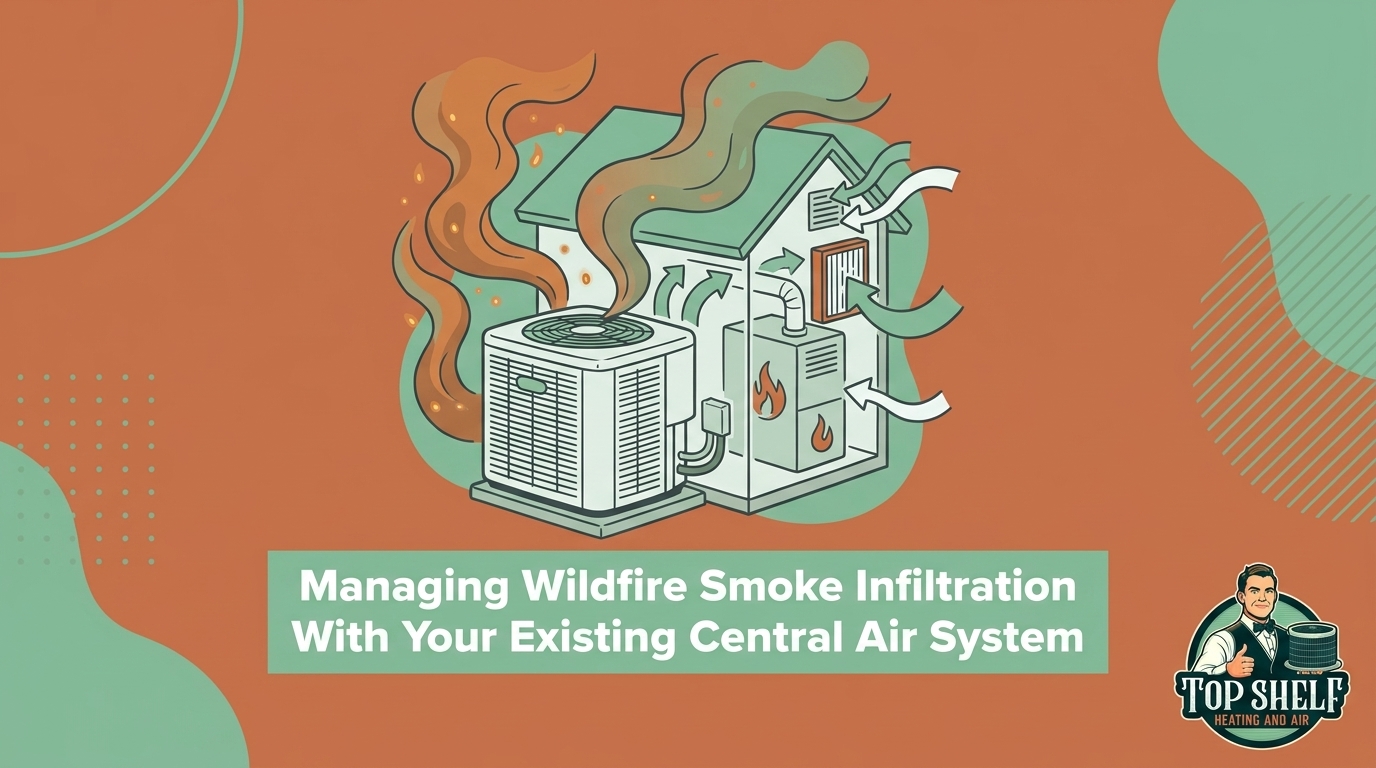
The mid-summer (July) wildfire season is already a stressful time of year, but managing wildfire smoke infiltration with your existing central air system becomes critical when the skies turn orange and the air smells like a campfire. With 100+ degree July heat regularly baking Southern California, your air conditioner is already running constantly just to keep your living space comfortable. When thick smoke rolls in from nearby ridges, your first instinct is to rely on that same cooling system to aggressively filter the air inside your house.
If you need to upgrade your home's defenses, exploring professional indoor air quality solutions or taking the time to schedule an AC tune-up is the safest way to prepare your equipment for heavy use.
However, balancing your immediate cooling needs with heavy-duty smoke filtration requires strategic adjustments. You face a core dilemma: filtering out hazardous PM2.5 smoke particles without completely suffocating your HVAC equipment. Blindly upgrading to the thickest, most restrictive filter on the hardware store shelf often leads to mechanical disaster. A standard air conditioner is designed to move a specific volume of air, and forcing it to pull that air through a dense barrier puts immense strain on the internal components. Instead of guessing, true protection requires understanding your system's mechanical limits and relying on professional indoor air quality solutions to keep your air clean and your equipment safe.
Why Your Standard AC Isn't Designed for Heavy Smoke
A central air conditioning system's primary job is temperature regulation, not heavy-duty air purification. When the dry brush conditions and seasonal winds in Moorpark CA and surrounding Southern California drive rapid, heavy smoke infiltration into residential neighborhoods, homeowners often expect their AC to act as a giant vacuum cleaner. Unfortunately, standard residential systems are simply not built out-of-the-box to handle the microscopic debris found in dense wildfire smoke.
The Anatomy of PM2.5 Particles
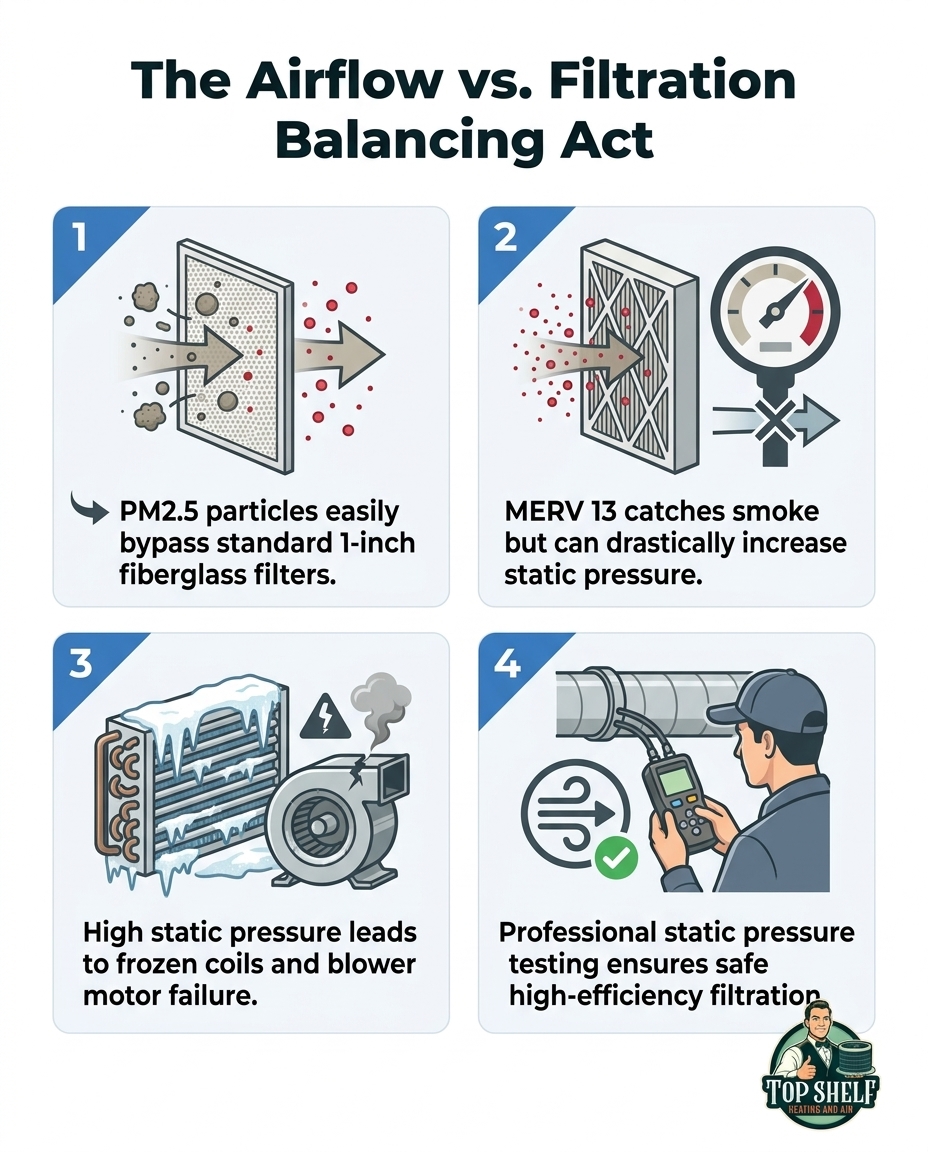
Wildfire smoke is largely composed of PM2.5 particles. These particles are incredibly small—measuring 2.5 micrometers in diameter or smaller. To put that size in perspective, a single grain of fine beach sand is about 90 micrometers across. Because they are so tiny, PM2.5 particles easily bypass standard 1-inch fiberglass filters. Those basic, see-through filters are only designed to catch large debris like pet hair, carpet fibers, and heavy dust to protect the blower motor, not to clean the air you breathe.
How smoke gets inside:
• Natural drafts: Wind pushes smoke through tiny gaps around window frames and under doors.
• The stack effect: Hot air rising in your home pulls outdoor air in through lower levels and crawlspaces.
• Exhaust fans: Running bathroom vents or kitchen hoods creates negative pressure, pulling outdoor makeup air inside.
When smoke infiltrates your home through these natural building ventilation points, those microscopic particles travel right through your return vents, bypass a cheap filter, and blow right back into your living room. The health impacts of PM2.5 bypassing standard 1-inch filters are significant, as these particles penetrate deep into the lungs. This reality leads many homeowners to rush out and buy the highest-rated filter they can find. But jumping straight into heavy filtration without understanding your system's capabilities introduces severe risks.
The Hidden Danger of MERV 13 Filters in Standard Systems
When smoke blankets the region, health organizations like ASHRAE typically recommend upgrading to a MERV 13 filter to capture wildfire smoke. MERV stands for Minimum Efficiency Reporting Value, and a rating of 13 is highly effective at trapping microscopic PM2.5 particles. However, there is a major catch: MERV 13 airflow restriction is a serious mechanical threat to standard residential HVAC systems.
To understand why, you need to understand static pressure. Static pressure is the resistance to airflow within your residential ductwork. Your blower motor is designed to push and pull a specific volume of air against a specific amount of resistance. When you swap a porous, 1-inch fiberglass filter for a dense, heavily pleated 1-inch MERV 13 filter, you dramatically increase that resistance. It is exactly like trying to breathe through a thick wool blanket while running a sprint.
How Restricted Airflow Kills Blower Motors
The physics of a blower motor working harder to pull air through a dense filter medium are straightforward. The motor strains, overheats, and consumes far more electricity. Over time, this extreme stress causes the motor to burn out entirely. Signs your system is struggling to breathe include strange, high-pitched whistling noises from the return vent and noticeably weak airflow coming from your supply registers.
This strain is compounded if your system is already battling other blockages. For instance, understanding how pets affect your AC performance is crucial, as pet dander and hair quickly clog dense filters, turning a MERV 13 into a solid brick of debris in a matter of days. We see the results of neglected, clogged systems regularly. During a recent summer heatwave, one local family was dealing with an AC system that completely stopped working and had been quoted a massive amount elsewhere for a full replacement. Upon our inspection, the actual issue was 40 years of extreme dust and debris buildup suffocating the blower motor. Once the motor and surrounding components were thoroughly cleaned and the airflow was restored, the existing system ran strong again without needing replacement.
The Risk of Frozen Evaporator Coils
Restricted airflow does more than just damage the blower motor; it directly disrupts the cooling process. Inside your home, your AC uses an evaporator coil to absorb heat. This coil gets incredibly cold during operation. It relies on a constant, steady stream of warm return air blowing over it to keep the condensation from freezing.
When a highly restrictive filter chokes off that warm airflow, the temperature of the coil drops below freezing. The condensation turns to ice, and soon the entire coil is encased in a solid block of ice. A frozen coil completely halts the cooling process during peak heat, leaving you sweating indoors with a system that runs non-stop but produces zero cold air.
Optimizing Your Thermostat Settings During a Fire
If your system is properly equipped to handle the static pressure of a high-efficiency filter, your thermostat becomes your primary tool for managing indoor air quality during the mid-summer (July) wildfire season. Knowing exactly which buttons to press can make a massive difference in how much smoke lingers in your home.
Understanding 'AUTO' versus 'ON'
Most homeowners leave their thermostat fan setting on "AUTO." This means the blower fan only turns on when the system is actively cooling the house. Once the target temperature is reached, the fan shuts off, and air stops moving through your filter. During a smoke event, this leaves stagnant, smoky air lingering in your living spaces for long stretches.
Setting the fan to "ON" forces the blower motor to run continuously, pulling air through the filter 24/7, regardless of whether the AC compressor outside is running. Running the fan "ON" continuously helps cycle air through the filter, constantly scrubbing the indoor environment.
Crucial Checklist for Safe Operation:
• Verify your filter compatibility: Only use the continuous "ON" setting if you know your specific system can handle the static pressure of your current high-efficiency filter.
• Seal the house completely: Keep all doors, windows, and fireplace dampers tightly closed while the system runs to prevent drawing in more outdoor smoke.
• Monitor system performance: Listen closely for straining motor sounds and check the airflow strength at your vents daily.
• Check the filter frequently: During an active fire, a filter can clog in a matter of days rather than months. Inspect it weekly.
Because continuous operation puts extra wear on your equipment, regular maintenance is critical before attempting to run the system constantly under heavy filtration loads. Top Shelf Heating and Air offers localized expertise in ensuring Moorpark systems are properly tuned to handle continuous fan operation during smoke events, so you can breathe easier without risking a breakdown. If you are unsure if your system is ready, scheduling AC maintenance in Moorpark is the best first step.
Supplemental Defenses: Duct Integrity and Standalone Purifiers
Relying solely on your central air conditioner to battle heavy smoke in Moorpark CA and surrounding Southern California is often asking too much of one machine. Offering holistic solutions that support the central AC without overloading it is the most effective strategy to keep your indoor air clean.
Sealing the Envelope
The role of ductwork integrity cannot be overstated. If you have leaky return ducts running through a hot, dusty attic, the negative pressure created by the blower motor will pull contaminated air directly into the duct system and blow it straight into your home. Identifying drafty areas where smoke enters and properly sealing duct leaks with mastic or specialized tape is just as important as upgrading your filter.
Furthermore, cleaning existing dust and debris from the ductwork prevents the system from blowing trapped particulates into the living space. We frequently see the impact of dirty ducts on respiratory health. One local family was dealing with constant allergy attacks and poor air quality after some heavy drywall work was done in the house. Because they had a toddler at home, improving the air was a top priority. A thorough cleaning of their air ducts and HVAC system removed the fine drywall dust that had settled deep inside. Afterward, the air quality significantly improved, the system ran quieter, and the irritation vanished entirely.
Using Standalone HEPA Purifiers
To take the burden off the central HVAC system, consider deploying standalone HEPA air purifiers in high-traffic rooms, like bedrooms and the main living area. These portable units are explicitly designed for heavy-duty air purification and can safely capture PM2.5 particles without impacting your central AC's airflow.
Because every house breathes differently, a whole-home assessment is the safest way to map out a smoke defense strategy. Getting a professional home performance assessment will reveal exactly where your home is vulnerable to smoke infiltration and how to fix it.
When to Call a Professional for Airflow Balancing
Transitioning from DIY filter swapping to professional static pressure evaluation is the smartest move you can make for your home's comfort and safety. Guessing your system's maximum filter rating is a gamble with expensive equipment, especially when MERV 13 airflow restriction is known to cause severe damage to standard units.
When you call a professional, they perform a comprehensive static pressure test. This involves measuring the exact resistance within your ductwork to see exactly how much your system is struggling to breathe.
Steps a professional takes to balance your system:
1. Measure Total External Static Pressure (TESP): Technicians use specialized tools to read the pressure on both the supply and return sides of the system to find bottlenecks.
2. Evaluate Ductwork Sizing: They check if your existing ducts are physically large enough to move the required volume of air with a thicker filter in place.
3. Assess Filter Grille Capacity: They determine if your return grilles can accommodate a high-efficiency filter without choking the system.
4. Recommend Safe Upgrades: Based on the data, they provide options for safe whole-home purification integrations that work with your equipment, not against it.
• Standard 1-Inch Fiberglass — PM2.5 Capture Ability: Very Poor — Airflow Restriction Risk: Very Low — Best Application: Basic equipment protection only
• 1-Inch MERV 13 Filter — PM2.5 Capture Ability: Excellent — Airflow Restriction Risk: Extremely High — Best Application: Only for systems tested for high static pressure
• 4-Inch Media Cabinet (MERV 11+) — PM2.5 Capture Ability: Great to Excellent — Airflow Restriction Risk: Low to Moderate — Best Application: Whole-home purification with safe airflow
• Electronic Air Cleaner — PM2.5 Capture Ability: Excellent — Airflow Restriction Risk: Very Low — Best Application: Maximum purification without suffocating the AC
These integrations often include installing deep media cabinets that hold 4-inch or 5-inch thick filters. Because these thicker filters have significantly more surface area, they can achieve high MERV ratings without restricting airflow. Top Shelf Heating and Air evaluates the entire mechanical footprint to protect both your respiratory health and the longevity of the HVAC equipment. The long-term benefits of having a balanced system mean you are fully prepared before the next fire season hits.
Frequently Asked Questions About AC and Wildfire Smoke
Should I set my AC fan to ON during a wildfire?
Setting your AC fan to "ON" keeps air circulating through your filter continuously, which helps scrub smoke from the air. However, you should only do this if your system is equipped with a filter capable of trapping PM2.5 particles without causing severe static pressure issues. If you are using a basic fiberglass filter, running the fan constantly will just blow the smoke around the house. Always ensure your system is rated for continuous operation under a heavier filtration load.
Does running AC help with wildfire smoke?
Running your AC can help reduce wildfire smoke indoors, provided you have a high-quality filter installed and your doors and windows are tightly sealed. The central system pulls indoor air through the return vents, passes it through the filter, and pushes cleaner air back into the rooms. Without a proper filter, the AC will simply circulate the contaminated air, offering cooling relief but no improvement in air quality.
Will wildfire smoke damage my air conditioner?
Wildfire smoke itself typically does not damage the outdoor compressor unit, as the outdoor equipment is designed to handle dust and outdoor elements. However, the heavy ash and soot can coat the outdoor condenser coils, reducing efficiency and causing the system to work harder. Indoors, the real damage occurs when homeowners install highly restrictive filters that choke the blower motor or cause the evaporator coil to freeze.
Does MERV 13 restrict AC airflow?
Yes, a standard 1-inch MERV 13 filter significantly restricts airflow in most residential HVAC systems. Because the filter medium is so dense to catch microscopic particles, the blower motor has to work much harder to pull air through it. This increased static pressure can lead to overheating motors, frozen coils, and drastically reduced cooling performance during hot weather.
Can a standard HVAC system handle HEPA filters?
No, standard residential HVAC systems cannot handle true HEPA filters. HEPA filters are incredibly dense and create an immense amount of static pressure that standard blower motors simply cannot overcome. Attempting to install a HEPA filter in a standard return grille will almost certainly suffocate the system and cause a breakdown. True HEPA filtration requires dedicated, standalone purifiers or specialized commercial-grade ventilation systems.
How often should I change my AC filter during active nearby wildfires?
During an active nearby wildfire, you should check your AC filter at least once a week. Because the air is heavily saturated with ash and smoke particles, a filter that normally lasts three months can become completely clogged in just a few days. If the filter looks dark grey or black, or if you notice a drop in airflow from your vents, it is time to replace it immediately.
Protect Your Home's Air Quality and Your AC Equipment
Managing wildfire smoke infiltration with your existing central air system requires a delicate balance between effective filtration and maintaining healthy airflow. While it is vital to keep hazardous PM2.5 particles out of your living space, protecting your lungs shouldn't mean destroying your AC in the process. Slapping a highly restrictive filter into an unprepared system during a peak summer heatwave is a recipe for frozen coils and burned-out blower motors.
Take the guesswork out of your home's air quality defenses. Schedule a professional assessment or a comprehensive tune-up today to ensure your system is fully fire-season ready. By understanding your equipment's true capabilities, you gain clear, actionable advice on how to safely use your thermostat settings and high-efficiency filters, keeping your indoor air clean and your HVAC system running strong all summer long.
Customer Testimonials


Blogs