


Why Your AC Quit on Moorpark's Hottest Day: The Role of the Capacitor
The Sudden Silence: When Your AC Dies in Peak Summer
Understanding exactly why your AC quit on Moorpark's hottest day: the role of the capacitor, is the first step to getting your home cool again when late-summer weather strikes. An August triple-digit heatwave is the absolute worst time for your air conditioning to suddenly stop blowing cold air. You walk into your living room, realize the vents are completely silent or blowing warm air, and immediately feel a wave of panic. The immediate fear is always the same: you assume the entire system has suffered a catastrophic failure, leaving you stranded in a sweltering house while facing a massive replacement bill.
Here is the reality we see time and time again at Top Shelf Heating and Air: a completely dead air conditioner on a scorching afternoon does not automatically mean your system is ruined. More often than not, this abrupt failure comes down to a single, highly stressed electrical part that has simply given out under the pressure of the heat. The sudden silence is jarring, but it is a specific protective mechanism of your cooling system. Rather than burning out the most expensive motors in your unit, a smaller component takes the hit.
Before you let the stress of a hot house overwhelm you, know that a quick, professional fix can often resolve the issue. Our team typically sees that by relying on professional air conditioning services, you can get a rapid, accurate diagnosis. In many cases, a targeted AC repair in Moorpark is all it takes to restore your comfort and get the cold air flowing again without a total system overhaul.
What Exactly Does an AC Capacitor Do?
To understand why this part is so critical, you have to look at how your air conditioner uses electricity. The capacitor is essentially a high-voltage, heavy-duty battery that stores electrical energy. Its primary job is to deliver a massive, instantaneous jolt of electricity to jumpstart the heavy motors inside your outdoor condenser unit—specifically the compressor and the condenser fan motor.
Think of it like the battery in your car. Your car's engine needs a massive initial surge of power to turn over and start running. Once the engine is running, the alternator takes over to keep things moving. Your air conditioner operates on a very similar principle. The motors inside your AC unit require three to five times more energy to start turning than they do to keep running. Your home's standard electrical grid simply cannot provide that massive, sudden spike of power all at once. If the AC tried to pull that much power directly from your electrical panel, it would trip your breaker every single time it turned on.
The electrical heavy lifting:
• Storing the charge: The capacitor draws electricity from your home's grid and stores it up, holding a charge that can range from 370 to 440 volts.
• Delivering the kick: When your thermostat calls for cooling, the capacitor releases all that stored energy in a fraction of a second, forcing the compressor and fan to start spinning.
• Maintaining the rhythm: Some systems use a "dual run" capacitor, which not only provides the starting jolt but also supplies a continuous, steady stream of voltage to keep the motors spinning smoothly while the system runs.
Without a functioning capacitor, those heavy-duty parts are completely paralyzed. They will try to start, but they simply cannot draw enough power to overcome their own resting weight. This is why a perfectly healthy compressor will sit completely silent if the capacitor beside it has failed. The muscle is there, but the electrical spark is gone.
Why Extreme Heat Pushes Capacitors Over the Edge
If capacitors are designed for heavy lifting, why do they fail so predictably in late summer? The answer comes down to thermal limits. Capacitors are highly heat-sensitive components. They are filled with a specialized dielectric fluid or oil that helps them store electrical charges and dissipate internal heat. Every capacitor is manufactured with a specific maximum operating temperature rating.
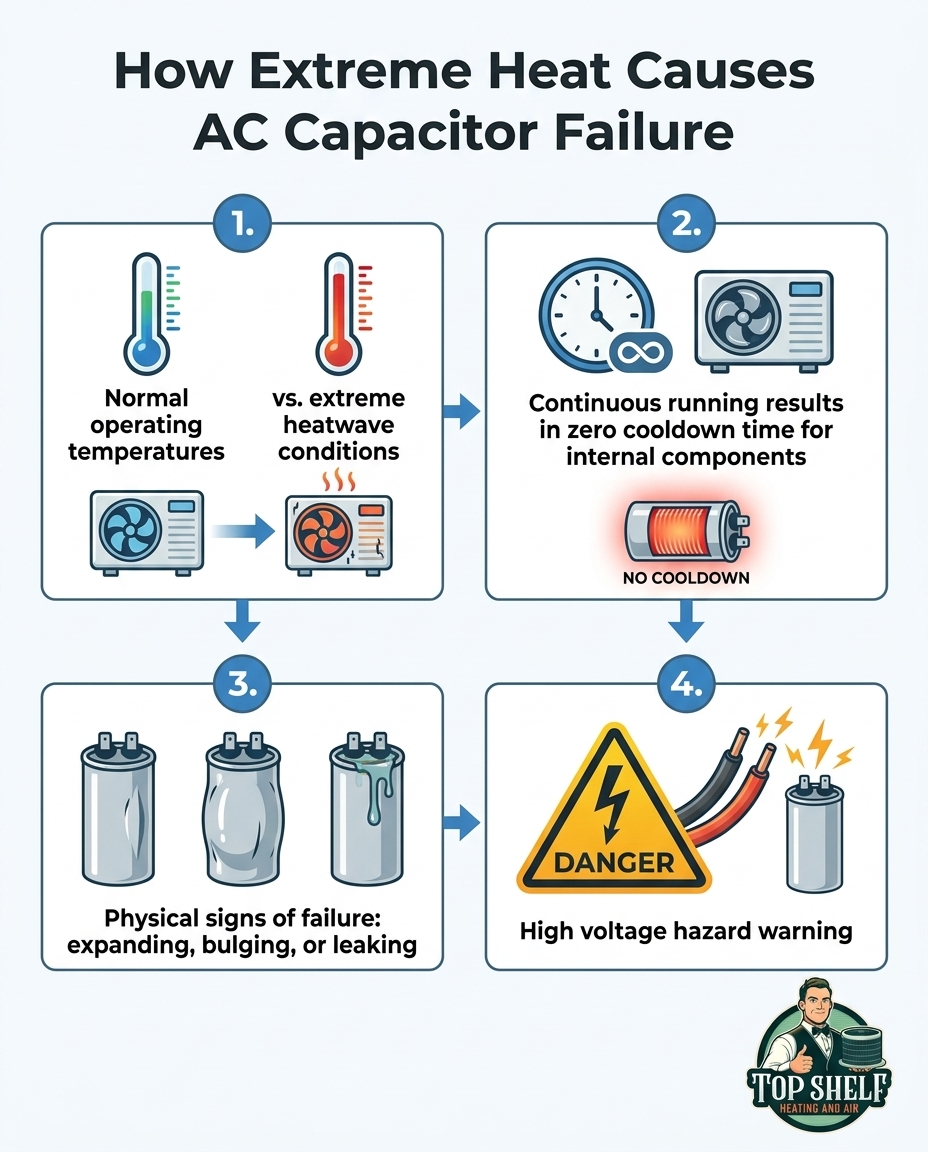
During an August triple-digit heatwave in Moorpark, your outdoor condenser unit faces a brutal combination of environmental and mechanical stress. The ambient outdoor temperature is already pushing 100°F or higher. Inside the metal cabinet sitting in the direct sun, temperatures can easily soar past 130°F. On top of that external heat, the capacitor is generating its own internal heat every time it sends a 400-volt jolt to the motors.
Under normal conditions, an air conditioner cycles on and off, giving the internal components time to cool down between runs. But during a severe heatwave, your AC runs continuously just to keep the house livable. This means the capacitor gets absolutely zero cooldown time. The internal oils begin to boil and expand. Eventually, the pressure becomes too great, and the top of the capacitor bulges outward, breaking the internal connections and killing the part instantly. It effectively takes the hit, sacrificing itself before the extreme electrical resistance can burn out your expensive compressor.
Our technicians at Top Shelf Heating and Air see this pattern often. Just recently, one local homeowner whose AC system needed repair experienced this exact thermal overload right as the back-to-school transition began. When our technician arrived to inspect the silent unit, they quickly diagnosed the blown component. After replacing it and getting the system back online, we explained the repair needs and provided efficiency pointers—like keeping the outdoor unit shaded and changing indoor filters—to help reduce the continuous strain on the system during the hottest parts of the day.
Telltale Signs Your AC Capacitor Has Failed
Knowing what to look—and listen—for can help you identify a capacitor issue before you assume the worst about your system. Because the capacitor controls the motors in the outdoor unit, the symptoms of failure are usually very distinct and localized to that outdoor cabinet.
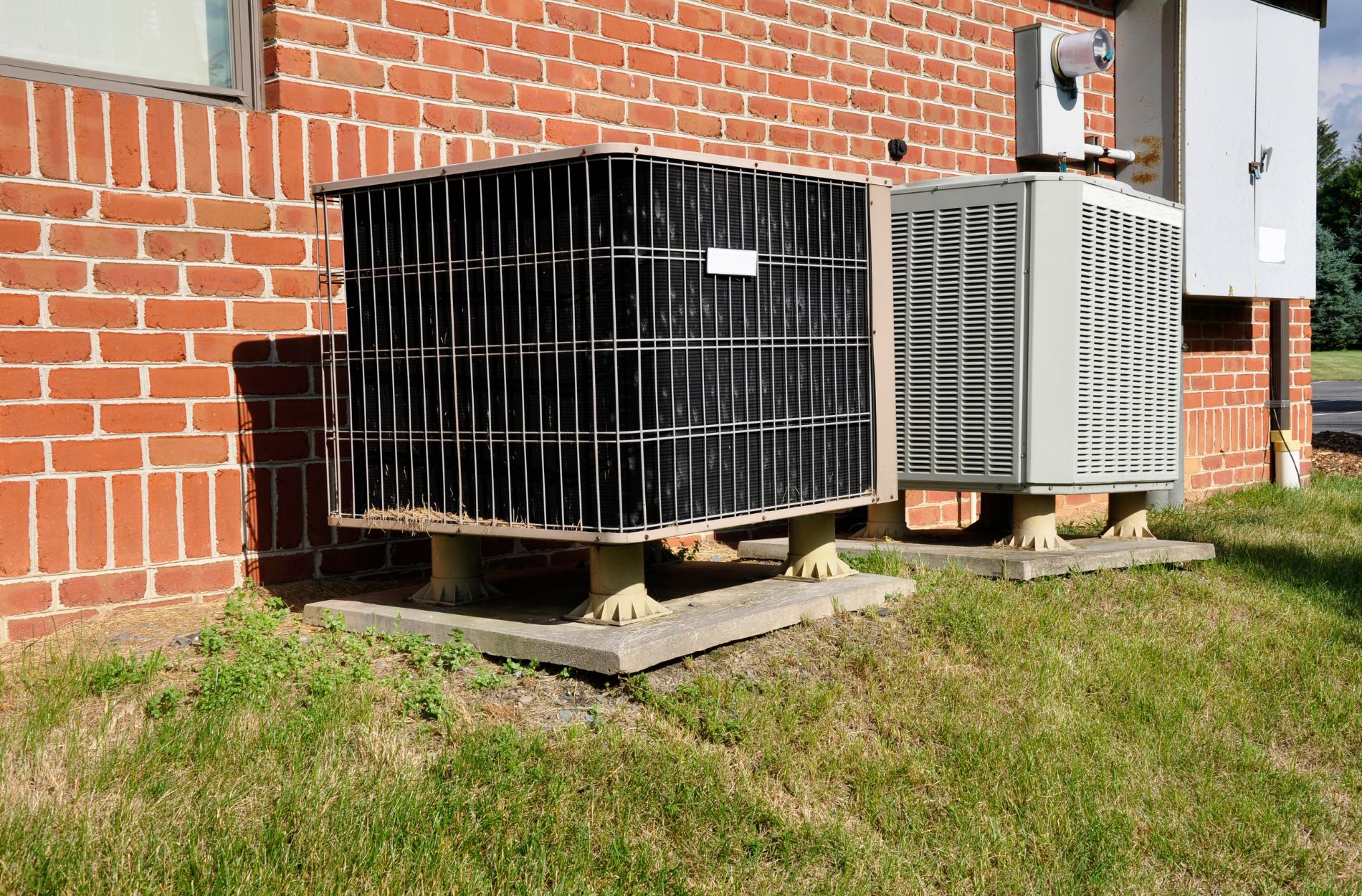
If you suspect your system is struggling during an August triple-digit heatwave, walk outside to your condenser unit and observe its behavior. Do not touch the unit or attempt to open the access panel, but pay close attention to the sounds and movements.
• A distinct humming or buzzing sound — What It Means: The motors are receiving a signal to turn on, but lack the electrical "kick" to actually start spinning.
• Fan blades are completely stationary — What It Means: The system sounds like it is trying to run, but the fan at the top of the unit is completely dead.
• Warm air blowing from indoor vents — What It Means: The indoor blower is pushing air, but because the outdoor compressor isn't running, the air isn't being cooled.
• Random, abrupt system shut-offs — What It Means: A weak capacitor is causing the compressor to draw too much amperage, tripping the system's safety limits.
Immediate Action Checklist:
• Turn the thermostat to OFF: If you hear humming but see no movement, turn the system off immediately. Leaving it on forces the compressor to keep trying to start, which can cause it to overheat and permanently burn out.
• Check your electrical panel: Verify that a standard household breaker hasn't simply tripped.
• Call for professional help: Once you confirm the outdoor unit is struggling to start, leave the system off and wait for an expert diagnosis.
The Danger of High Voltage: Why You Need a Professional
When an air conditioner breaks down in the middle of a Moorpark summer, the temptation to search for a quick DIY fix is incredibly strong. You might see videos online showing how to swap a small metal cylinder in the side of your AC unit. However, attempting to test, discharge, or replace a capacitor yourself is exceptionally dangerous and should never be attempted by an unlicensed homeowner.
Capacitors are designed to store massive amounts of electricity. Even after you have completely shut off the power to the AC unit at your main electrical breaker, the capacitor still holds a lethal high-voltage charge. It acts like a loaded spring. If you touch the terminals or attempt to remove the wires without properly discharging the component using specialized insulated tools, that 370 to 440-volt charge will travel directly through you.
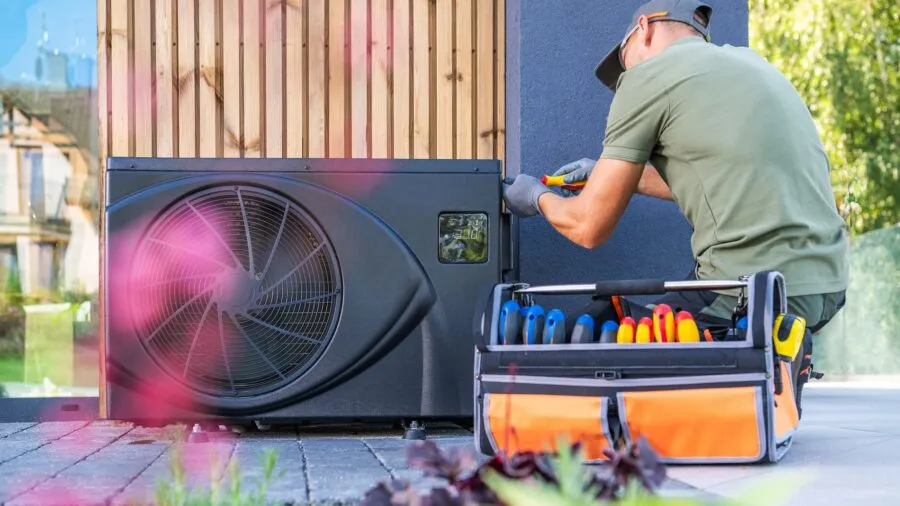
This is why scheduling a professional ac capacitor replacement moorpark ca is the only safe option. A licensed technician has the training, the insulated equipment, and the proper multimeters to safely test the component, discharge the stored energy, and install a replacement that matches your system's exact microfarad requirements. Using the wrong size capacitor can permanently damage your compressor.
In our years serving Moorpark, we've helped countless families through these late-summer breakdowns. Another local customer whose AC went out unexpectedly the day before a major heat spike was relieved when our Top Shelf Heating and Air technician arrived promptly to evaluate the silent unit. We carefully explained the electrical issue, safely discharged the failing component, answered all the homeowner's questions, and offered straightforward options to get the house cooling again. Working with our dedicated local team ensures you get this kind of rapid, reliable emergency response. You get a fast, honest diagnosis and a safe repair, rather than being pressured into unnecessary replacements while you are vulnerable and panicking in a hot house.
Protecting Your System: The Role of Preventative Care
While an August triple-digit heatwave is often the final straw that breaks a capacitor, extreme heat is rarely the only factor at play. Age and accumulated wear and tear contribute heavily to component degradation. Over time, the internal components of a capacitor naturally lose their ability to hold a full charge. As the capacitor weakens, it has to work harder and stay engaged longer to start the motors, which generates even more internal heat.
This is where proactive care becomes your best defense against sudden summer breakdowns. In our experience maintaining Moorpark AC systems, we recommend routine cleaning because by keeping the entire system healthy, you reduce the overall electrical load on every single component. For example, if your outdoor condenser coils are caked in dirt and debris, the system cannot release heat efficiently. The compressor runs hotter, the pressures rise, and the capacitor is forced to operate in a much harsher environment. Keeping the system clean directly extends the life of your electrical parts.
The Value of Proactive Checks
Routine checks allow a professional to monitor the health of your electrical components long before they fail. During routine AC maintenance, a technician will use a multimeter to measure the exact microfarad output of your capacitor. If a capacitor is rated for 45 microfarads but is only testing at 38, the technician knows it is growing weak and is at high risk of blowing during the next heatwave.
By scheduling an annual AC tune-up in the spring, you can catch these weak components and replace them proactively on your own schedule, rather than waiting for an emergency failure on the hottest day of the year. Furthermore, if you have an older system that continually struggles with electrical loads or blows components frequently, our technicians can help you evaluate the overall health of the unit. In some cases, exploring generally available HVAC rebates and energy incentives might make upgrading to a highly efficient, modern system a smart long-term investment.
Frequently Asked Questions About AC Capacitor Failures
Can extreme heat cause an AC capacitor to fail?
Yes, excessive ambient heat combined with continuous operation pushes the capacitor past its maximum temperature rating, causing the internal oils to expand, bulge, or blow. When the outside temperature in Moorpark climbs into the triple digits, the temperature inside the metal AC cabinet is significantly hotter. If the system runs non-stop to keep up with the thermostat, the capacitor gets no time to cool down, leading to rapid thermal degradation and sudden failure.
Why did my AC suddenly stop working on a hot day?
Sudden failures on hot days are frequently caused by thermal overload tripping a breaker or a blown capacitor that cuts power to the compressor and fan. When a capacitor blows, the electrical bridge to the heavy motors is broken. The thermostat will still call for cooling, and you might hear a humming sound from the outdoor unit, but the system simply lacks the stored electrical energy required to actually start the cooling cycle.
What happens when an AC capacitor goes bad?
The compressor and outdoor fan lose their ability to start. The system may hum loudly, but no cold air will be produced indoors. Because the capacitor acts as the "starter battery" for your air conditioner, a failed capacitor means the motors are completely paralyzed. The indoor blower fan may continue to push air through your vents, but because the outdoor condenser is offline, that air will remain warm and unconditioned.
Is it safe to run my AC with a bad capacitor?
No. Leaving the system running while the capacitor is dead can cause the compressor to overheat and burn out, leading to a much more expensive repair. When the thermostat sends a signal to start, the compressor draws high amperage trying to turn over. Without the capacitor's help, it becomes "locked" and rapidly overheats. If you suspect a bad capacitor, switch your thermostat to the OFF position immediately to protect your equipment.
How long does a professional capacitor replacement take?
Once a professional arrives and diagnoses the issue, safely discharging the old component and installing a new one typically takes less than an hour. The actual process of swapping the part is straightforward for a trained technician with the right tools. The most important part of the visit is ensuring the new capacitor is perfectly sized for your specific system and verifying that no other components were damaged when the old one failed.
Can routine checks prevent a capacitor blowout?
Yes, technicians can measure the electrical output (microfarads) of a capacitor. If it is dropping below its rated capacity, it can be replaced proactively before it fails. During a standard maintenance visit, a technician will test the capacitor under load. If the readings show that the component is struggling to hold a charge, you have the opportunity to replace it affordably on the spot, completely avoiding an emergency breakdown during a heatwave.
Restore Your Home's Comfort Safely and Quickly
A silent air conditioner during an August triple-digit heatwave is incredibly stressful, but it doesn't automatically mean your entire cooling system is ruined. In many cases, the system has simply sacrificed a small electrical component to protect the larger, more expensive motors from thermal overload.
The most important thing you can do is turn the system off to prevent further damage and reach out to Top Shelf Heating and Air for immediate professional help. Our licensed technicians can safely navigate the high-voltage hazards, accurately diagnose the failure, and replace the blown capacitor with the correct part. Don't let a single failed component keep you sweltering in the heat—schedule an inspection today to get the cold air flowing safely and reliably once again.
Customer Testimonials


Blogs