


The Truth About Setting Your Thermostat to 68 Degrees During a Heatwave
Surviving the Peak Heat Without Breaking Your AC
At Top Shelf Heating and Air, we know that discovering the truth about setting your thermostat to 68 degrees during a heatwave can be the difference between surviving a July peak summer heatwave in total comfort and facing an expensive, catastrophic system breakdown. When the outdoor temperatures skyrocket and you return to a sweltering house after a long day, the immediate instinct is to march straight to the wall and crank the dial down as low as it goes. Many homeowners mistakenly believe that a drastic temperature drop will force the system to cool the space rapidly, acting like an accelerator pedal for cold air.
This creates a critical decision point: Does dropping the temperature drastically actually speed up the cooling process, or does it push the equipment far past its mechanical limits? The reality of residential cooling is rooted in strict physics, not the numbers on a digital screen. Understanding how your system actually operates under extreme thermal loads will save you from an entirely preventable emergency repair. To keep your home cool and your equipment healthy, learning the mechanical realities of your Air Conditioning system is the smartest first step.
Does Lowering the Thermostat Cool Your Home Faster?
Our technicians are asked this constantly, and the short answer is no. Lowering your thermostat to 68 degrees does not cool your home any faster than setting it to 75 degrees. To understand why this cooling myth persists, you have to look at the basic mechanics of standard residential HVAC systems and how they process thermal energy.
The Single-Speed Compressor Reality
The vast majority of standard residential air conditioners operate using a single-speed compressor. This means the system only has two operational states: 100 percent on, or 100 percent off. Unlike a car where pressing the gas pedal harder increases your speed, your thermostat is simply an on/off switch. It tells the system when to turn on and when to shut off, but it has absolutely no control over the intensity, speed, or capacity of the cooling process itself.
When you set the dial to 68 degrees, the system pumps out conditioned air at the exact same constant temperature and volume as it would if the dial were set to 78 degrees. The air coming from your supply vents does not get any colder just because the target temperature is lower. The only thing a lower setting accomplishes is forcing the single-speed compressor to run for a longer duration in a futile attempt to reach that lower number.
Comparing the Myth to the Reality
• Setting the dial to 68°F pumps colder air into the rooms. — The Mechanical Reality: The AC delivers air at a constant temperature, regardless of the thermostat target.
• A drastic temperature drop cools the house faster. — The Mechanical Reality: The system removes heat at a fixed rate; a lower setting just makes it run longer.
• The AC will eventually reach whatever temperature is set. — The Mechanical Reality: The system is mathematically limited by the outdoor ambient temperature.
Understanding Your AC's Maximum Temperature Drop
To fully grasp why a 68-degree setting is dangerous during extreme weather, you need to understand the concept of the temperature differential, often referred to in the HVAC industry as "Delta T." This is the mathematical limit of what standard residential cooling equipment can achieve.
The 20-Degree Differential Rule
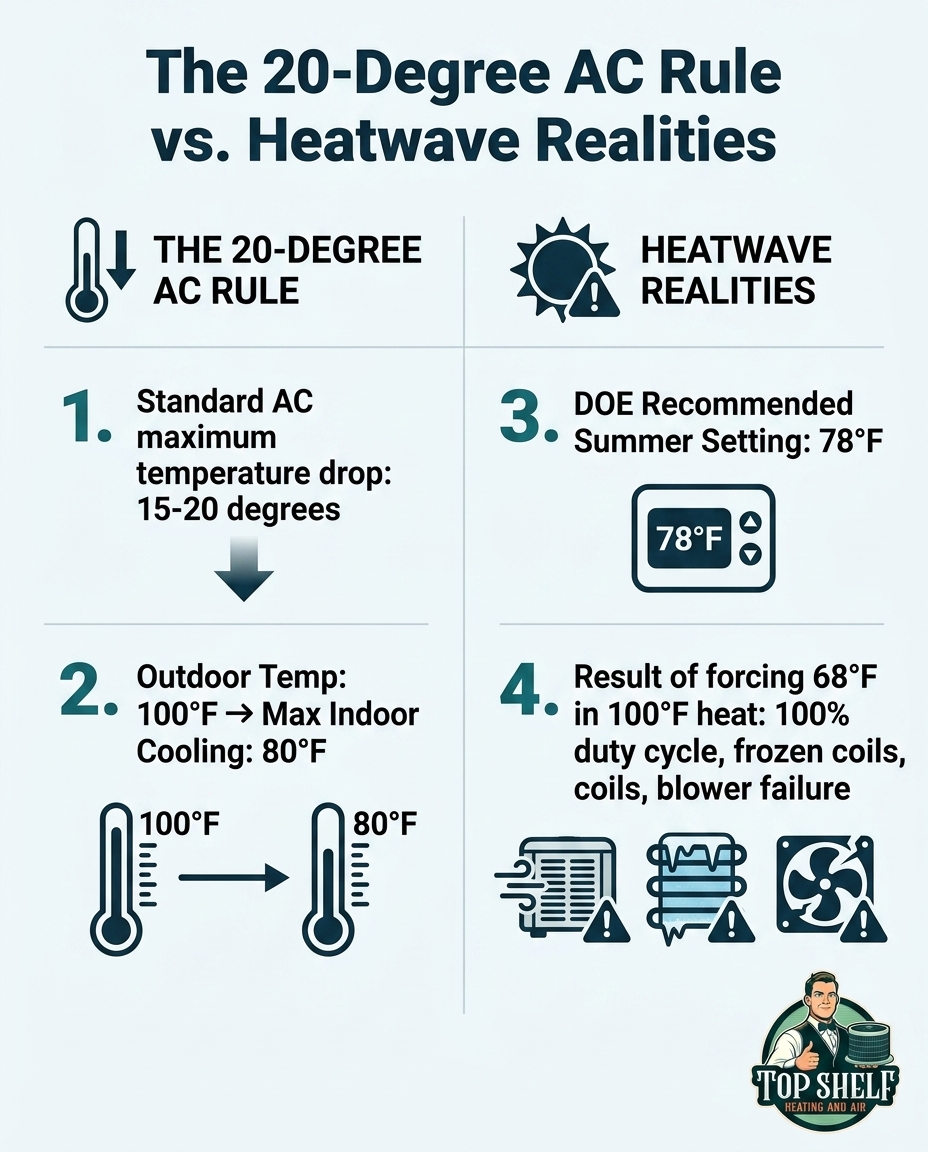
Standard residential air conditioners are engineered to cool a home to a maximum of about 15 to 20 degrees lower than the outdoor ambient temperature. This is a fundamental limitation of the refrigeration cycle, which relies on absorbing heat from inside your home and releasing it outside. When the outdoor environment is excessively hot, the system's ability to reject heat into that environment diminishes significantly.
With dry summer heatwaves frequently pushing outdoor temperatures past 100 degrees in our Moorpark CA service area, our team constantly responds to calls where extreme temperature differentials have become highly dangerous. If the temperature outside is 105 degrees, a perfectly functioning, well-maintained air conditioner can realistically cool the indoor space to between 85 and 90 degrees. Attempting to force a 37-degree drop by setting the dial to 68 degrees wildly exceeds the mechanical capacity of the equipment.
When the system cannot physically reach the target temperature, it will never complete its cooling cycle. It will simply run endlessly, fighting a losing battle against the laws of thermodynamics until a mechanical component fails.
The Mechanical Toll of Extreme Thermostat Settings
Forcing your system to chase an impossible 68-degree target during a severe heatwave does more than just inflate your energy usage. It triggers a specific cascade of mechanical failures that often ends in a total system shutdown.
The Breakdown Timeline
1. The 100% Duty Cycle: Because the thermostat target is mathematically impossible to reach, the system never receives the signal to cycle off. The compressor and blower motor are forced into a 100% duty cycle, running non-stop for hours on end.
2. Evaporator Coil Freezing: As the system runs continuously without a break, the evaporator coil inside your home gets excessively cold. The natural humidity and condensation in the air begin to freeze on the surface of the coil. Without a resting period to allow this frost to melt, the ice builds up rapidly, eventually encasing the entire coil in a solid block of ice.
3. Airflow Restriction and Blower Strain: Once the evaporator coil freezes over, air can no longer pass through the fins. The blower motor now has to work twice as hard, straining against a solid wall of ice to push air through the system.
4. Overheating and Failure: The excessive strain causes the blower motor to draw more electrical current, overheat, and eventually burn out or trip the system's safety breakers.
Our Top Shelf Heating and Air team sees this pattern frequently. During a recent peak-summer service call in Moorpark, a homeowner needed to repair their AC system and improve its overall efficiency. The technician carefully explained the necessary repairs and provided actionable tips for more efficient AC use, specifically highlighting how continuous operation causes massive strain on the blower motor. Educating homeowners on safe operational limits is a vital part of any comprehensive AC tune up. While proper maintenance helps a system handle heavy stress, no amount of preventative care can override the laws of physics when the thermostat is set too low.
Recommended Temperatures for Comfort and System Safety
Rather than relying on dangerous, extreme thermostat drops, homeowners need to adopt safe, mathematically sound temperature targets. Setting a realistic goal protects your equipment while still providing significant relief from the outdoor heat.
The Department of Energy Guidelines
The Department of Energy officially recommends setting your thermostat to 78 degrees during the summer months. This target provides the optimal balance between indoor comfort, energy efficiency, and mechanical safety. A 78-degree setting respects the 20-degree differential rule, allowing the system to successfully complete its cooling cycles, rest, and prevent ice buildup on the evaporator coils.
If 78 degrees feels too warm, the most effective solution is to utilize ceiling fans and portable oscillating fans. Moving air creates a wind-chill effect on human skin, evaporating moisture and making a 78-degree room feel closer to 72 degrees. This allows you to feel significantly cooler without putting any additional mechanical strain on your primary cooling equipment.
Maintaining a realistic temperature prevents system lockouts and reduces overall energy consumption. Another pattern our technicians see often involves systems shutting down because they were pushed too hard. In one instance, a leaky air conditioner left a home completely without AC during a sweltering July week. After a quick appointment, the technician addressed the refrigerant issue and made clear recommendations with detailed explanations on how to manage the thermostat safely moving forward. The AC was fixed, and the customer felt fully informed on how to prevent future overexertion. Furthermore, proving that you run an efficient system at safe temperatures is often a key factor when finding HVAC rebates and energy incentives for upgraded, high-efficiency equipment.
How to Protect Your System During Extreme Heat
Surviving a heatwave requires a proactive approach to home cooling. Instead of demanding more from your air conditioner, focus on reducing the thermal load on your house so the system doesn't have to work as hard.
At Top Shelf Heating and Air, we focus on providing honest, expert advice based on years of servicing Moorpark homes, empowering you to prevent self-inflicted breakdowns. Prioritizing long-term system health over quick fixes is the best way to ensure your home stays comfortable year after year. Here are the most effective ways to protect your system when temperatures soar:
• Block solar heat gain: Close your blinds, shades, and thermal curtains on all south- and west-facing windows during the hottest parts of the afternoon. Sunlight beaming through glass acts like a greenhouse, drastically raising the indoor temperature.
• Limit internal heat generation: Avoid using heat-generating appliances during peak afternoon hours. Run your oven, clothes dryer, and dishwasher early in the morning or late at night to prevent adding unnecessary heat to the home.
• Maintain unrestricted airflow: Ensure your air filters are completely clean. A clogged filter suffocates the system, forcing the blower motor to work harder and accelerating the freezing process on the evaporator coils.
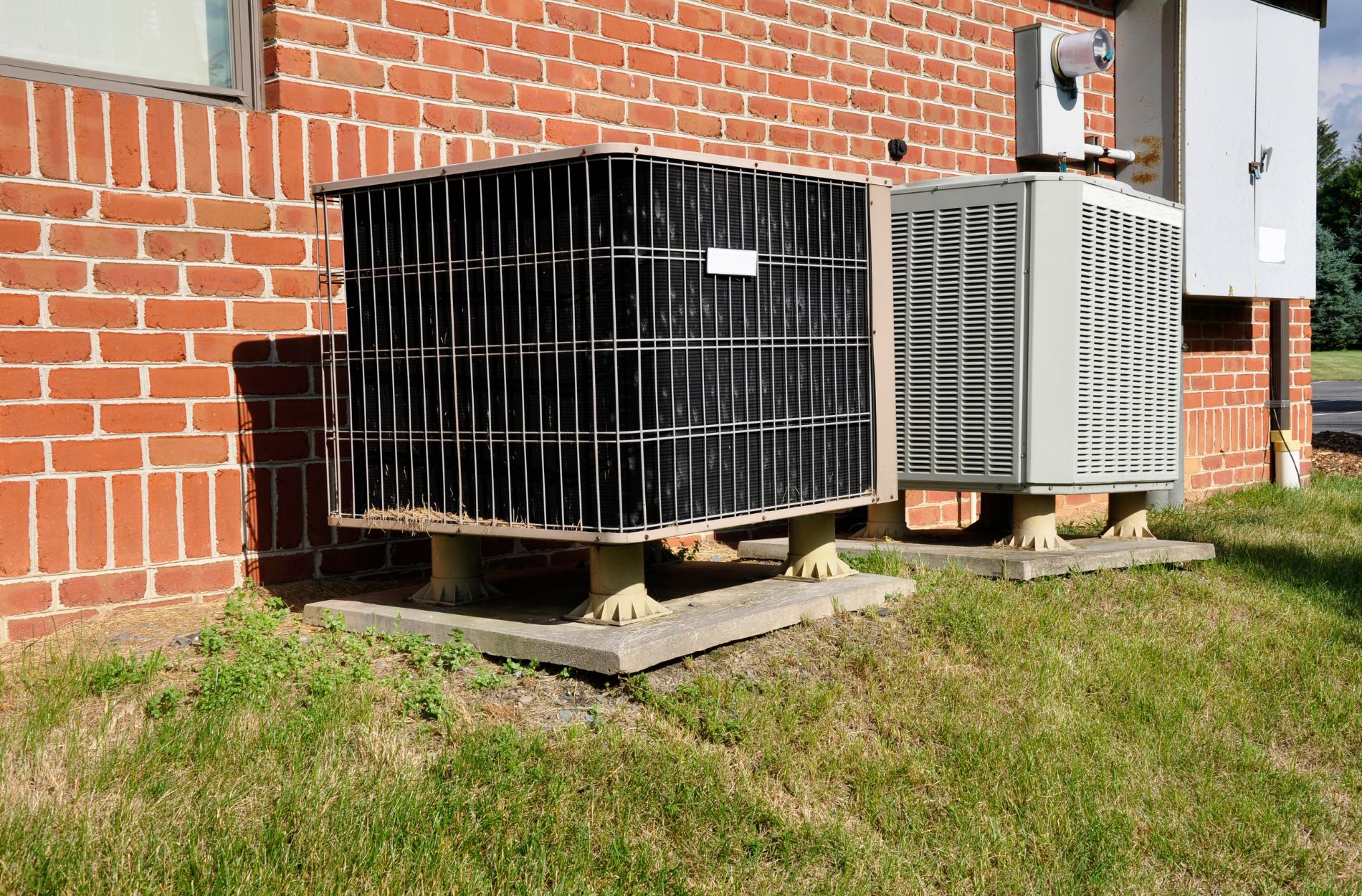
• Clear the outdoor unit: Check the condenser unit outside and remove any debris, tall grass, or obstructions blocking the side panels. The system needs maximum airflow to effectively release the heat it pulls from your home.
• Stay ahead of the weather: Establishing regular AC maintenance in Moorpark ensures your system is operating at its true maximum capacity long before the first heatwave of the season hits.
Frequently Asked Questions About Thermostat Settings in a Heatwave
Does setting the AC lower make it cool faster?
No, air conditioners cool at a constant rate regardless of the thermostat setting. The system operates with a single-speed compressor that pumps out air at a fixed temperature. Lowering the thermostat only forces the unit to run longer, not faster, which increases wear and tear without accelerating the cooling process.
Why does my AC freeze up in the summer?
Continuous operation without cycling off causes the natural condensation on the evaporator coils to freeze into solid ice. In our experience, this is almost always triggered by setting the thermostat too low during a heatwave, or by having restricted airflow from a severely dirty air filter. Once the coil freezes, the system can no longer cool the home.
What is the best thermostat setting during a heatwave?
The Department of Energy recommends setting your thermostat to 78 degrees during the summer. This setting successfully balances indoor comfort with the strict mechanical limits of the AC unit. Utilizing ceiling fans alongside this setting will create a wind-chill effect, making the room feel noticeably cooler without straining the equipment.
Why is my AC running constantly but not cooling?
The system is likely trying to reach an impossible temperature differential. If it is 105 degrees outside, standard residential units max out at around 85 degrees indoors. If your thermostat is set to 70 degrees, the unit will run non-stop trying to hit a target it mathematically cannot achieve, resulting in constant operation with no noticeable cooling.
Can a programmable thermostat prevent my AC from overworking?
Yes, by automatically adjusting temperatures based on the time of day and your schedule. A programmable or smart thermostat prevents the system from running at maximum capacity when you aren't home, allowing the equipment to rest and reducing the risk of overheating during the hottest afternoon hours.
Keep Your Cooling System Running Strong All Summer
Understanding the physics behind your cooling equipment allows you to stay comfortable without risking a catastrophic breakdown. The truth about setting your thermostat to 68 degrees during a heatwave is that it ignores the mechanical limits of your system, leading directly to frozen coils and burned-out motors. Setting a realistic temperature target, generally no more than 20 degrees cooler than the outdoor air, is the absolute best way to survive a July peak summer heatwave safely.
If you are keeping your thermostat at a reasonable 78 degrees and your system is still struggling to maintain a basic 20-degree drop, there may be an underlying mechanical issue restricting its performance. Don't wait for a total system failure to get the help you need. Schedule a professional inspection or AC repair with our team today to ensure your cooling system has the strength and capacity to handle whatever the summer weather brings.
Customer Testimonials


Blogs